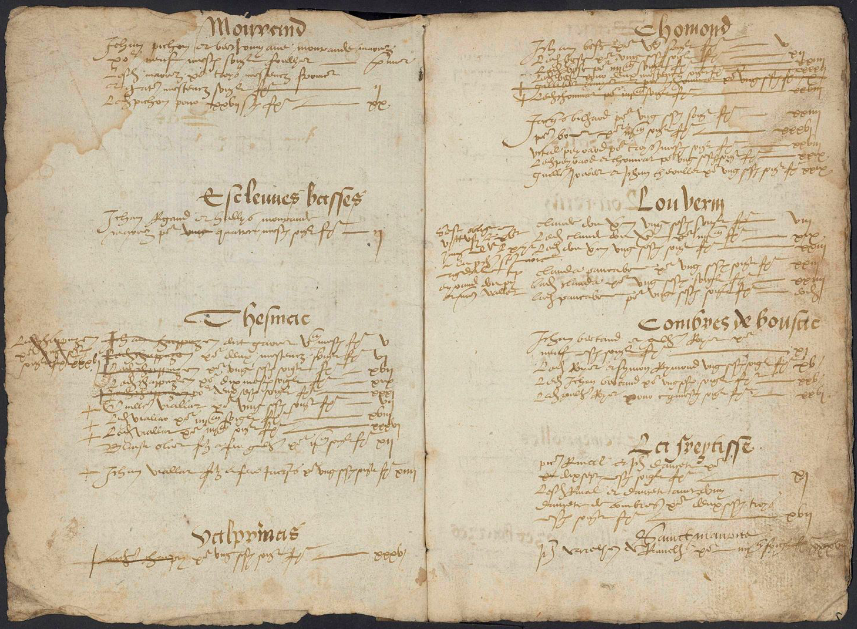
It's one of the most common blockers in French genealogy: the research is going well, generation after generation, until it hits a wall right around 1790–1792. This is almost never a coincidence, or a mistake in method. It's a structural break in French archives themselves, one that affects nearly every family in the country.
Before the French Revolution, there is no civil registration system in the modern sense. Births, marriages and deaths were recorded by parish priests, in parish registers. This practice dates back to the 1539 Ordinance of Villers-Cotterêts, which required priests to keep baptism registers, then the 1667 ordinance, which extended the requirement to marriages and burials and required two identical copies to be kept.
This double record-keeping is a stroke of luck for today's genealogists, but an unequal one depending on the village. One of the two copies, known as the "greffe" collection, was deposited with the court; the other, the "communal" collection, stayed with the parish or town hall. These two collections haven't survived the centuries equally. Town hall fires, wartime destruction, water damage, plain neglect: it's not unusual for one of the two collections to have disappeared while the other survived elsewhere.
In 1792, the Revolution took responsibility for civil records away from priests and handed it to town councils. This is the birth of the republican civil registration system still in use today. For many families, this administrative shift is also a real archival break: some parish records were never properly handed over to the new town halls, others were lost in the turbulent period that followed.
In practice, this means 1792 is not a hard legal cutoff, but a point of document fragility. Many families can be traced well before this date, sometimes back to the 17th or even 16th century, provided their parish's registers were preserved and digitised.
The first thing to check, when research seems to stop dead around this period, is whether the town in question has actually put its pre-1792 parish registers online through the departmental archive service. Some towns have collections going back to 1600, others have kept almost nothing before 1750. This depends entirely on the local history of each parish, not on the family being researched.
The second thing to check, if the communal collection seems incomplete or missing, is whether the "greffe" copy exists for the same period. Since the two copies weren't always kept in the same place or condition, one collection regularly fills the gaps left by the other.
Finally, when both collections are genuinely missing for a given town, indirect sources sometimes remain: notarial deeds from before 1792 mentioning a family relationship, notarial minute books, or Ancien Régime tax records kept separately. These sources take longer to consult and don't exist everywhere, but they sometimes allow you to get past a wall that civil records alone could never clear.
If your family history seems to stop dead around this period, it isn't necessarily the end of the trail. It's often the point where research becomes longer, more delicate, and where cross-referencing several types of sources makes all the difference — see my genealogy research packages if you'd rather hand this stage over to someone experienced.